
By Fortune Africa Editorial Desk
For decades, Senegal has been regarded as one of Africa’s most stable democracies—a nation whose political maturity, institutional continuity and peaceful transfers of power have distinguished it from many of its regional peers. Today, however, the country finds itself navigating one of its most delicate political transitions in recent history.
Although the economy continues to demonstrate resilience and long-term growth prospects remain attractive, political tensions within the country’s leadership have introduced an element of uncertainty that investors are watching closely.
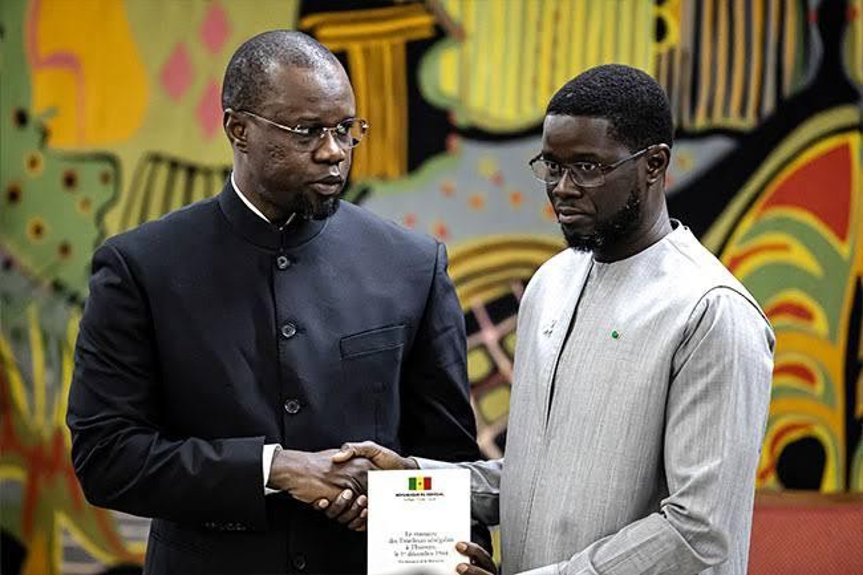
At the centre of the current impasse is a deteriorating working relationship between President Bassirou Diomaye Fayeand Prime Minister Ousmane Sonko—two leaders whose political partnership swept to power in 2024 on a wave of popular demand for change, transparency and economic sovereignty.
Their alliance was once viewed as one of Africa’s most formidable political partnerships. Increasingly, however, differences over governance, institutional priorities and political strategy have exposed cracks within the administration.
The Alliance That Changed Senegal
To understand today’s tensions, one must first understand how Senegal arrived here.
For nearly four years, Senegal experienced intense political contestation under former President Macky Sall. The imprisonment of opposition leader Ousmane Sonko, the dissolution of his political movement, repeated legal battles and widespread youth protests created one of the country’s most volatile political periods in decades.
Many Senegalese viewed these events as symptomatic of deeper frustrations over unemployment, inequality, governance and economic opportunity.
Unable to contest the presidency himself because of legal obstacles, Sonko endorsed Bassirou Diomaye Faye—his close political ally—as the opposition’s presidential candidate.
The strategy proved historic.
Following Sonko’s release from detention shortly before the elections, the opposition mobilised unprecedented public support, resulting in a decisive first-round victory for Diomaye Faye in March 2024.
Almost immediately after assuming office, President Faye appointed Sonko as Prime Minister.
To supporters, the arrangement represented continuity of the reform agenda.
To political observers, however, it also introduced an unusual constitutional dynamic: two exceptionally powerful political figures sharing executive authority while each retained enormous personal influence over the ruling coalition.
It was an arrangement celebrated for its symbolism but always likely to require careful management.
From Political Partnership to Institutional Friction
The relationship between the President and Prime Minister was built upon shared political ideals, but governing a nation presents challenges very different from leading an opposition movement.
As the administration transitioned from campaigning to governing, differing approaches to policy implementation and state management began to emerge.
The ruling coalition has since encountered disagreements over several important issues, including:
the pace of institutional reforms; parliamentary priorities;
appointments within key public institutions; oversight of government spending; economic policy sequencing; and legislative strategy.
None of these differences are unusual in democratic governments.
What has made them particularly significant in Senegal is the prominence of the personalities involved and the overwhelming expectations placed upon the administration by an electorate eager for rapid change.
Political observers note that as both leaders possess strong independent political legitimacy, balancing institutional authority with political influence has become increasingly complex.
Parliament Becomes the Battleground
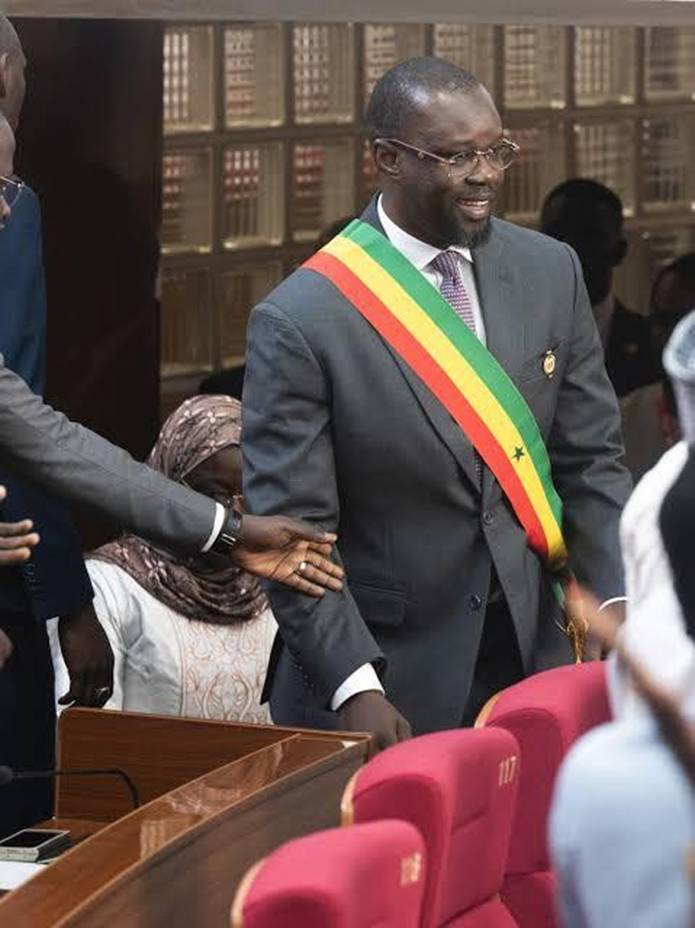
The disagreements have inevitably spilled into the National Assembly.
Disputes over committee leadership, legislative scheduling and reform priorities have periodically slowed the government’s agenda.
Opposition parties, though fragmented, have used parliamentary procedures to challenge the administration, while civil society organisations have continued to scrutinise the pace of promised reforms.
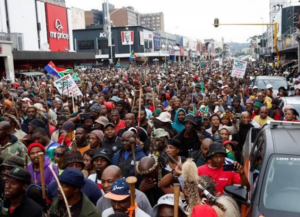
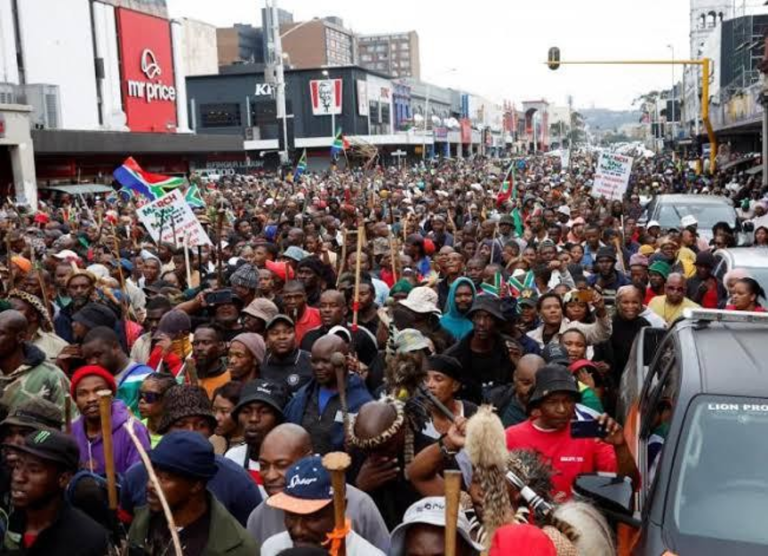
Outside Parliament, demonstrations have periodically occurred as supporters from different political constituencies seek to influence the direction of government policy.
Yet importantly, these disputes have largely remained within constitutional and institutional channels—a reflection of Senegal’s long democratic tradition.
Economic Fundamentals Remain Intact
Despite the political turbulence, Senegal’s macroeconomic story remains one of considerable promise.
The country is entering what many economists describe as a transformational period.
[O)W.SC0MMISSI0
The commencement of offshore oil and natural gas production is expected to reshape public revenues over the coming decade.
Major infrastructure investments continue across transport, logistics and energy.
Dakar remains one of West Africa’s most dynamic commercial centres.
Regional integration through ECOWAS and expanding trade opportunities further strengthen the country’s long-term prospects.
These fundamentals explain why many institutional investors continue to view Senegal favourably.
However, investors consistently identify one factor as increasingly important: predictability.
Infrastructure developers, financial institutions and international partners generally have little difficulty adapting to ambitious reform programmes.
What markets find more difficult to price is uncertainty regarding implementation timelines.
Announcements that are delayed by political negotiations increase project risk, complicate financing decisions and defer capital deployment.
In today’s investment environment, execution often matters as much as policy itself.
Why Investors Are Watching Closely
Political disagreement is not inherently damaging to an economy. Indeed, vigorous democratic debate can strengthen governance.
The concern arises when political competition begins delaying administrative execution.
For Senegal, the coming months will be particularly significant. The government must simultaneously:
implement institutional reforms; manage public finances responsibly;
prepare for energy revenue management;
maintain investor confidence; preserve social cohesion; and
continue delivering on campaign promises.
Each objective requires coordinated political leadership.
Any prolonged disagreement within the executive risks diverting attention from economic implementation toward political management.
Institutions Tested—Not Broken
There remains an important distinction between political tension and institutional instability.
Senegal’s democratic institutions have repeatedly demonstrated resilience over the past six decades.
The judiciary, electoral institutions, Parliament, civil society and independent media continue to play active roles in maintaining constitutional order.
Unlike many countries experiencing executive disputes, Senegal retains a strong tradition of resolving political disagreements within legal and institutional frameworks rather than through unconstitutional means.
That institutional maturity provides an important source of reassurance for investors.
Most analysts therefore caution against interpreting current developments as evidence of systemic instability.
Instead, they characterise the situation as the inevitable growing pains of a new governing coalition transitioning from opposition politics into the realities of state administration.
The Next Two Quarters Matter
The next six months may prove decisive.
Should the President and Prime Minister succeed in reaffirming a common governing agenda, accelerating implementation of reforms and restoring policy predictability, Senegal could quickly regain political momentum while capitalising on its exceptional economic opportunities.
Failure to do so, however, risks prolonging legislative gridlock at precisely the moment when the country is preparing to benefit from one of the most significant economic transitions in its modern history.
Fortune Africa Perspective
Senegal’s current political tensions should not obscure its remarkable strengths.
The country remains one of Africa’s most institutionally robust democracies, supported by a diversified economy, improving infrastructure, expanding energy production and an increasingly sophisticated private sector.
Yet political capital is a finite resource.
Every month consumed by internal political disagreement is a month not spent implementing reforms capable of transforming economic potential into measurable prosperity.
For investors, the question is no longer whether Senegal possesses opportunity.
That question has already been answered.
The question now is whether political cohesion can keep pace with economic ambition.
History suggests Senegal’s institutions are capable of weathering this moment. Markets will now be watching to see whether its politics can do the same.