
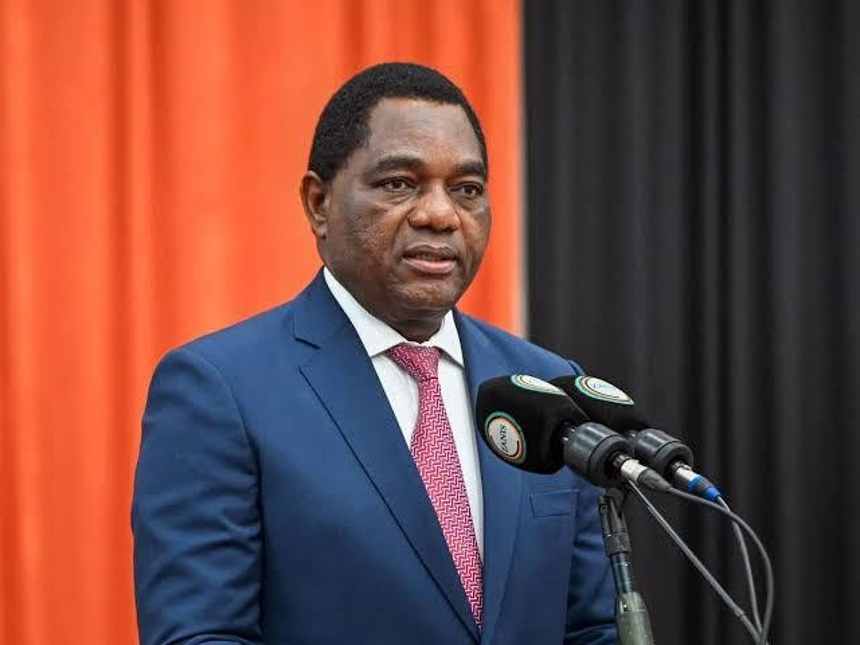
As Zambia moves into another pivotal election season, the country’s political contest is shaping up as far more than a battle for State House. It is becoming a referendum on competing economic philosophies, fiscal stewardship and the pace at which ordinary Zambians expect to see the benefits of recovery translate into improved living standards.
After several years dominated by sovereign debt restructuring, fiscal consolidation and macroeconomic reforms, the national conversation has shifted from crisis management to a broader question: what comes next?
For millions of voters, the election will be judged not only by political promises but by which leadership can best deliver jobs, lower the cost of living and unlock Zambia’s vast economic potential.
For investors, meanwhile, the campaign represents an important moment to assess policy continuity, regulatory certainty and the country’s long-term investment trajectory.
An Election Defined by Economics
Unlike previous election cycles, where constitutional reform or governance issues often dominated public discourse, this campaign is overwhelmingly centred on economic performance.
The rising cost of living, employment creation, mining sector policy, agriculture, energy security and private sector growth have emerged as the defining issues shaping political debate.
The backdrop is significant.
Over the past four years, Zambia has undertaken one of Africa’s most closely watched sovereign debt restructuring programmes, working with international creditors to restore fiscal sustainability after becoming the continent’s first pandemic-era sovereign default.
The restructuring process has been accompanied by difficult but necessary fiscal reforms aimed at restoring investor confidence, stabilising public finances and rebuilding macroeconomic credibility.
While these reforms have been welcomed by international financial institutions and development partners, many households continue to feel the pressure of inflation, rising food prices and constrained disposable incomes.
This economic reality has created fertile ground for competing political narratives.
Two Visions for Zambia’s Future
The governing administration has largely anchored its campaign on continuity.
Its message is that the difficult reforms undertaken over the past several years are beginning to bear fruit and should be allowed to mature into sustained economic growth.
Government leaders point to progress in restoring international confidence, attracting investment, expanding mining production, improving energy infrastructure and strengthening Zambia’s fiscal position.
Their argument is straightforward: economic transformation requires consistency, and abandoning ongoing reforms midway could undermine the gains already achieved.
Opposition parties, however, have adopted a different approach.
Their campaigns focus on the immediate economic pressures facing households, arguing that many citizens have yet to experience tangible improvements in their daily lives.
They advocate faster interventions to reduce the cost of living, accelerate job creation and revisit aspects of Zambia’s mining policy to ensure greater national benefit from the country’s abundant mineral resources.
Although their policy prescriptions differ, both sides recognise that economic management—not ideology—is likely to determine electoral success.
Mining Remains the Centrepiece
No discussion of Zambia’s economic future is complete without mining.
Copper remains the backbone of the national economy, while increasing global demand for critical minerals such as cobalt positions Zambia at the centre of the global energy transition.
Every major political party has identified mining as the primary engine of future economic growth.
The debate is no longer about whether mining should drive development, but rather how its benefits should be distributed.
Key policy questions include:
- Increasing local value addition.
- Expanding downstream mineral processing.
- Encouraging exploration investment.
- Improving community participation.
- Strengthening local supplier development.
- Balancing investor competitiveness with national revenue generation.
- For international mining companies, policy stability remains paramount.
Large-scale mining investments require planning horizons measured in decades rather than election cycles.
Consequently, investors will be paying close attention not only to campaign promises but also to signals regarding regulatory continuity after the election.
Elections and Investor Confidence
Election periods inevitably introduce a degree of uncertainty into financial markets.
Businesses often postpone major investment decisions until policy direction becomes clearer, while lenders and investors adopt a cautious wait-and-see approach.
Zambia is unlikely to be an exception. Yet elections also create opportunities.
Infrastructure development, energy expansion, agriculture, manufacturing and digital transformation feature prominently across virtually every party’s manifesto.
Regardless of which political formation ultimately prevails, these sectors are expected to remain central pillars of Zambia’s medium-term development agenda.
For companies positioned within these industries, the post-election environment may present significant opportunities for growth.
The Debt Story Is Still Being Written
One of the defining legacies of the current administration has been its management of Zambia’s sovereign debt restructuring.
Although substantial progress has been made in restoring debt sustainability, the process has also highlighted the importance of prudent fiscal management, transparent borrowing and sustainable public investment.
The next government—whoever forms it—will inherit both the benefits and responsibilities arising from that restructuring.
Maintaining investor confidence while expanding public services and stimulating inclusive growth will require careful policy balancing.
Fiscal discipline and social expectations will continue to compete for political attention.
What Business Wants
For Zambia’s private sector, the priorities remain remarkably consistent regardless of political affiliation.
Business leaders continue to seek:
Policy certainty. Predictable taxation. Stable mining legislation. Reliable electricity supply.
Improved transport infrastructure. Reduced regulatory complexity. Expanded access to affordable finance. Efficient public administration.
These structural issues matter far more to long-term investment decisions than campaign rhetoric.
Ultimately, investors are less concerned with political personalities than with the consistency of economic policy after the ballots have been counted.
Fortune Africa Perspective
Zambia enters this election from a stronger macroeconomic position than it occupied just a few years ago.
International confidence has improved, debt restructuring has advanced significantly and investor interest in the country’s mining sector continues to grow.
However, macroeconomic stability alone does not win elections.
Citizens increasingly judge governments by their ability to convert national economic gains into household prosperity.
That challenge will confront whichever administration emerges victorious.
For investors, Zambia remains one of Africa’s most promising long-term markets, supported by abundant natural resources, strategic regional positioning and a growing reform agenda.
The coming election should therefore be viewed not as a source of instability, but as an important milestone in the country’s democratic and economic evolution.
The ultimate winner will not simply be the party that secures the most votes.
It will be the leadership capable of transforming Zambia’s considerable economic potential into broad-based prosperity, sustainable employment and renewed confidence in the country’s future.
As the campaign intensifies, one reality remains clear: Zambia is not merely choosing its next government—it is choosing the direction of its economic journey for the decade ahead.