
From the Rainbow Nation to Fortress South Africa?
For much of the past three decades, South Africa has occupied a unique place in Africa’s political imagination.
It was the nation whose liberation struggle united an entire continent. From Lusaka to Dar es Salaam, from Harare to Gaborone and Lagos, African governments, liberation movements and ordinary citizens provided sanctuary, financial support and diplomatic backing to the African National Congress (ANC) during its struggle against apartheid.
When Nelson Mandela walked free in 1990, the celebration was not South Africa’s alone—it was Africa’s victory.
Today, however, a growing number of observers are asking a difficult question:
Is South Africa gradually isolating itself from the continent and the wider international community?
Recent events suggest the question is no longer merely rhetorical.
A Nation Turning Inward
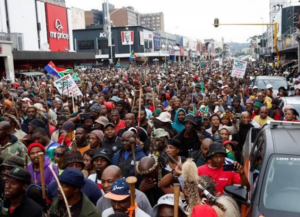
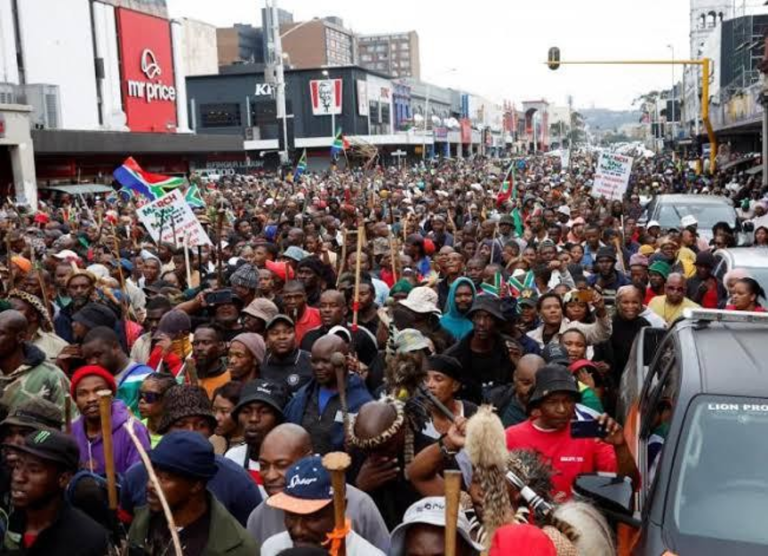
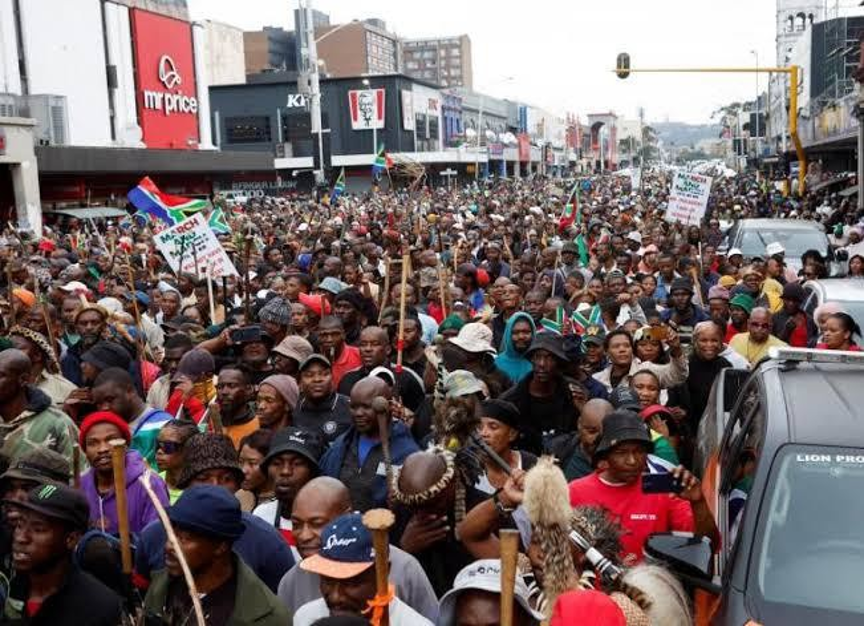
On 30 June, thousands of demonstrators marched across South Africa demanding that undocumented migrants leave the country. Although many protest organisers said their focus was illegal immigration, numerous reports indicated that both documented and undocumented foreign nationals experienced intimidation, while thousands of migrants fled their homes or sought assistance from their embassies out of fear of violence. Authorities deployed large numbers of police and military personnel, and President Cyril Ramaphosa condemned violence while acknowledging concerns about immigration.
The demonstrations did not emerge in isolation.They reflected years of growing frustration over unemployment, crime, inadequate public services and economic inequality. For many South Africans, immigrants—particularly those from elsewhere in Africa—have become symbols of broader state failures.
Yet economists and migration specialists have repeatedly cautioned that the country’s economic challenges are rooted primarily in structural issues, weak economic growth and governance shortcomings rather than immigration alone. Nevertheless, perception often proves more politically powerful than evidence.
![]() The End of Pan-African Solidarity?
The End of Pan-African Solidarity?
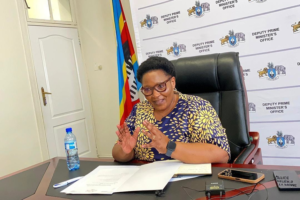
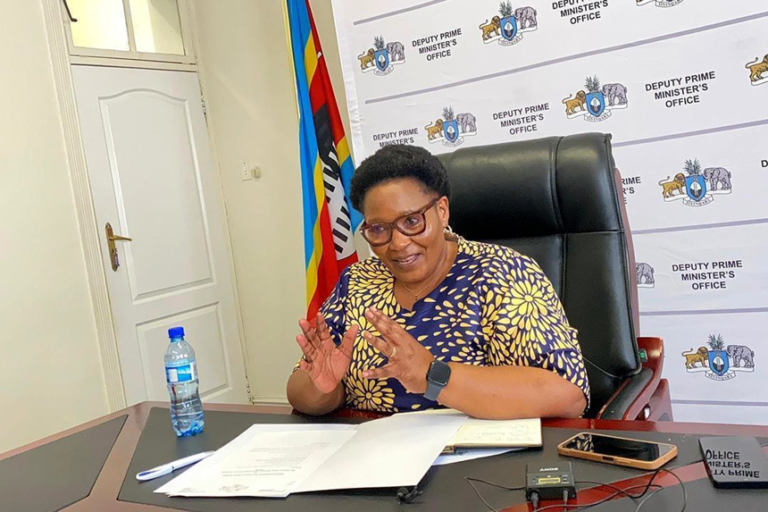
Equally striking has been the tone adopted by some government leaders. Minister in the Presidency Khumbudzo Ntshavheni recently argued that South
Africa should not continue to be expected to repay historical solidarity extended by other African countries during the anti-apartheid struggle, saying apartheid belongs to
the past and that other African states must resolve their own domestic challenges rather than expecting South Africa to shoulder their burdens.
The remarks generated debate far beyond South Africa’s borders.
For many Africans, they appeared to challenge one of the moral foundations upon which post-apartheid South Africa built its continental leadership—Pan-African solidarity.
Many African nations sacrificed economically, diplomatically and militarily to support South Africa’s liberation.
Countries such as Zambia, Tanzania, Angola, Mozambique, Botswana and Zimbabwe hosted exiled activists, liberation camps and ANC leadership for decades, often at enormous economic and security costs.
The expectation was never that South Africa would permanently repay those sacrifices.
Rather, it would become a leader committed to African cooperation and shared prosperity.
Whether Minister Ntshavheni’s remarks reflect official government doctrine or simply a harder-edged articulation of domestic political realities, they have inevitably prompted uncomfortable conversations across the continent.
Diplomatic Friction Beyond Africa
South Africa’s foreign policy has also become increasingly assertive on the global stage.
Its decision to institute proceedings against Israel at the International Court of Justice elevated Pretoria’s international profile while simultaneously straining relations with Israel and some of its allies.
Supporters viewed the move as a principled defence of international humanitarian law. Critics regarded it as unnecessarily confrontational.
At the same time, relations between Pretoria and Washington have experienced periods of strain over differing foreign policy positions, geopolitical alignments and trade-related concerns.
None of these disagreements, taken individually, are extraordinary. Sovereign nations routinely pursue independent foreign policies.
The broader question, however, is whether the cumulative effect of these diplomatic tensions is narrowing South Africa’s room for strategic engagement.
Fortress South Africa?
Domestically, immigration has become one of the country’s defining political issues.
Groups advocating stricter immigration controls argue that porous borders have placed unsustainable pressure on employment, housing, healthcare and policing.
These concerns resonate with many citizens confronting one of the world’s highest unemployment rates.
Yet South Africa’s economy has long depended on regional labour mobility.
Mining, agriculture, construction, hospitality and retail have all benefited from workers arriving from neighbouring countries.
Thousands of entrepreneurs from elsewhere in Africa have established businesses that create employment and contribute to local economies.
Business organisations increasingly warn that hostility toward legal foreign residents risks undermining investment confidence, reducing entrepreneurial activity and damaging South Africa’s reputation as Africa’s commercial gateway.
The Cost of Isolation
South Africa remains the continent’s most industrialised economy. Johannesburg continues to serve as one of Africa’s principal financial centres.
Its legal institutions, banking system and capital markets remain among the strongest in the developing world.
These advantages have not disappeared. Reputation, however, is an economic asset.
International investors evaluate more than macroeconomic indicators.
They also assess political stability, social cohesion, diplomatic relationships and regulatory predictability.
Images of migrants fleeing violence or legally resident foreigners being intimidated inevitably shape international perceptions, regardless of the government’s official position.
Similarly, strained diplomatic relationships with major trading partners can complicate economic engagement, even where commercial ties remain intact.
Leadership Comes with Expectations
South Africa occupies a unique position on the continent. Unlike many emerging economies, it is expected to lead.
Leadership, however, brings expectations that extend beyond economic performance. It includes moral authority, diplomatic influence and the ability to build consensus.
The country’s liberation history has long provided South Africa with exceptional soft power across Africa.
That legacy remains enormously valuable.
The question is whether it is being strengthened—or gradually diminished.
A Necessary National Conversation
None of this diminishes South Africa’s legitimate right to manage its borders, enforce immigration laws or pursue an independent foreign policy.
Every sovereign nation has both the right and the responsibility to regulate migration, protect national security and prioritise the welfare of its citizens.
The challenge lies in distinguishing between enforcing immigration laws and allowing xenophobia or hostility toward legally resident foreigners to take root.
Likewise, there is an important distinction between pursuing principled foreign policy positions and unintentionally reducing diplomatic goodwill.
The two should never be conflated.
Fortune Africa Perspective
South Africa is not becoming isolated overnight. Nor has it abandoned its commitment to Africa.
Its institutions remain influential, its economy remains central to regional commerce and its voice continues to carry considerable weight in international affairs.
Yet perception matters in diplomacy just as much as policy.
The combination of anti-foreigner demonstrations, increasingly inward-looking political rhetoric and diplomatic friction with important international partners has created an impression—fair or otherwise—that South Africa is becoming more defensive and less outward-looking than the nation many Africans celebrated in 1994.
Whether that perception hardens into reality will depend on decisions made over the coming years.
South Africa has always been more than just another African state. It has been an idea.
An idea that democracy, reconciliation and continental solidarity could coexist with economic leadership.
The challenge today is ensuring that this idea remains as powerful abroad as it once was at home.